Get in your inbox the latest News and Offers from

Aramid chopped fiber Uses
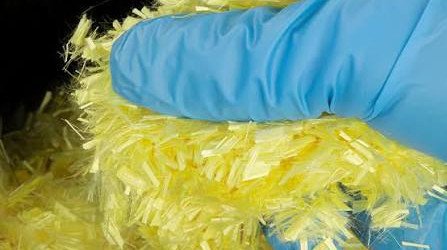
Aramid chopped fiber Uses
Aramid chopped fiber is a precision-cut short synthetic fiber derived from para-aramid or meta-aramid filaments (commonly known by trade names such as Kevlar®, Twaron®, or Nomex®). Cut into discrete lengths ranging typically from 1 mm to 12 mm, it offers high tensile strength, thermal resistance, chemical inertia, and abrasion resistance.
Primary Applications & End-Use Industries
1. Automotive & Transportation
* Friction Materials: Used as a reinforcement fiber in non-asbestos organic (NAO) and semi-metallic brake pads, brake linings, and clutch facings to improve wear resistance and thermal stability.
* Tire Reinforcement: Mixed into rubber compounds to enhance tear strength, cut resistance, and mechanical durability in heavy-duty commercial and off-road tires.
* Gaskets & Seals: Blended into elastomeric sheet gaskets to provide heat resistance and fluid compatibility under high system pressures.
2. Aerospace & Composites
* Bulk Molding Compounds (BMC) & Sheet Molding Compounds (SMC): Blended with epoxy, phenolic, or vinyl ester resins for injection or compression molding to produce lightweight, impact-resistant structural components.
* Aerospace Interior & Exterior Parts: Integrated into composite matrices for radomes, access panels, and interior fairings requiring high strength-to-weight ratios and flame retardancy.
3. Construction & Infrastructure
* Fiber-Reinforced Concrete (FRC) & Mortar: Mixed into specialty concrete and mortars to reduce micro-cracking, increase toughness, and improve impact and abrasion resistance in industrial flooring and precast panels.
* Asphalt & Paving Mixes: Added to modified asphalt formulations to mitigate rutting, thermal cracking, and fatigue in high-load road infrastructure.
4. Protective Apparel & Industrial Textiles
* Spun Yarns & Nonwovens: Processed into short staple fibers to blend with other synthetic or natural fibers for flame-resistant (FR) protective garments, heat-insulating felts, and filtration media.
* Thermal Insulation: Incorporated into high-temperature seals, protective sleeves, and furnace insulation barriers.
5. Defense & Ballistics
* Protective Armor Matrices: Compounded into specialized polymer matrices for composite hard armor, helmet linings, and spall liners where short-fiber reinforcement helps dissipate energy.
Key Properties Summary
| Attribute | Benefit in Manufacturing |
|---|---|
| High Tensile Strength | Provides structural reinforcement without adding excess weight |
| Thermal Resistance | Maintains mechanical integrity at continuous high temperatures (up to 250°C?400°C depending on aramid type) |
| Abrasion & Impact Resistance | Extends wear life in high-friction and high-impact environments |
| Chemical & Corrosion Resistance | Resists degradation from organic solvents, fuels, and chemical agents |